

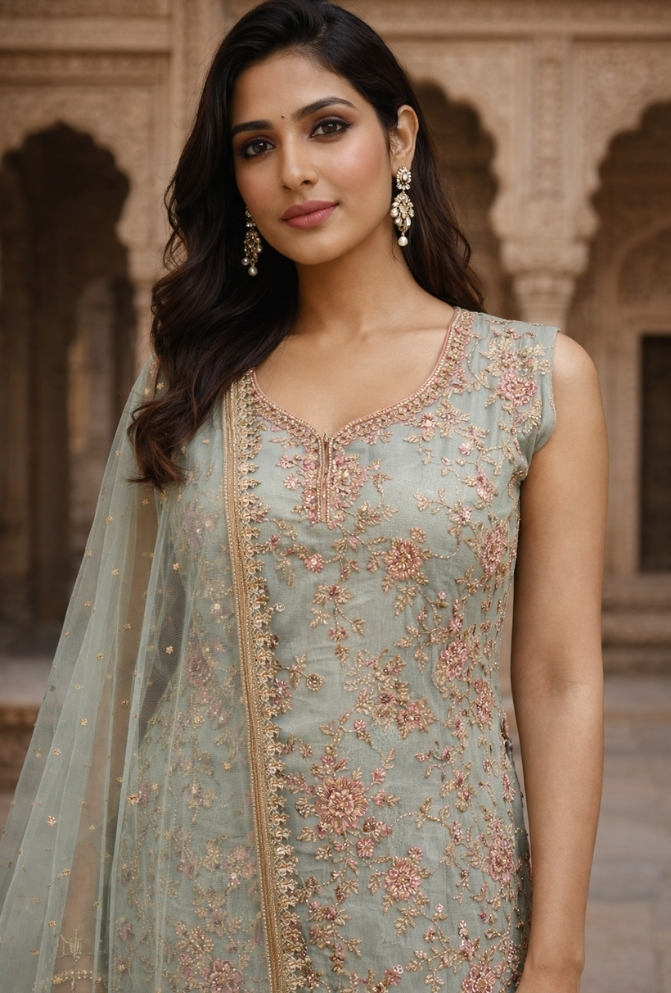
Designer Lehengas vs Mass-Produced Bridal Wear: What Truly Defines Luxury?
Choosing a bridal lehenga is one of the most important decisions for a bride. The outfit is not just something she wears for a few hours, it becomes part of one of the most memorable days of her life.
Today, brides often face an important question while shopping:
Should I choose a designer lehenga or a mass-produced bridal outfit?
At first glance, both options may look beautiful. However, there are significant differences between them in terms of craftsmanship, quality, and overall experience.
Understanding these differences helps brides choose an outfit that truly reflects the importance of their wedding day.
What Is Mass-Produced Bridal Wear?
Mass-produced bridal wear is created in large quantities and sold in multiple stores.
These outfits are designed for quick production and wide distribution.
Common features of mass-produced lehengas include:
- Machine embroidery
- Repeated designs available in many stores
- Standard sizes
- Limited customization options
These garments are made to be affordable and accessible, which makes them suitable for many occasions.
However, because they are produced in large volumes, they may lack uniqueness and intricate craftsmanship.
What Is a Designer Lehenga?
A designer lehenga is considered couture. This means it is designed and crafted with greater attention to detail.
Instead of being produced in large quantities, designer lehengas are often created in limited numbers or customized for individual clients.
A designer lehenga usually includes:
- Handcrafted embroidery
- High-quality fabrics
- Unique design elements
- Personal fittings
- Styling consultations
These factors make the outfit feel more special and exclusive.
Craftsmanship Makes the Difference
One of the biggest differences between designer and mass-produced lehengas is craftsmanship.
Designer outfits often include traditional Indian embroidery techniques such as:
- Zardozi
- Threadwork
- Mirror work
- Hand-stitched embellishments
These techniques are done by skilled artisans and may take several days or even weeks to complete.
In contrast, mass-produced garments often rely on machines to replicate patterns quickly.
While machine embroidery can look attractive, it does not always have the same depth and detailing as handcrafted work.
Fabric Quality
Fabric quality plays a major role in defining luxury.
Designer lehengas often use premium fabrics such as:
- Pure silk
- Organza
- Velvet
- High-quality net
- Tissue fabrics
These fabrics enhance the richness of the outfit and give it a beautiful structure.
Mass-produced outfits may sometimes use synthetic blends or lower-cost fabrics to reduce production costs.
Although they may look similar initially, the feel and durability are often different.
The Importance of Exclusivity
Every bride wants to feel unique on her wedding day.
Mass-produced outfits are often available in multiple stores, which means many brides may end up wearing the same design.
Designer lehengas offer exclusivity.
They are usually produced in limited numbers or customized according to the bride’s preferences.
At boutiques like Suzzan & Sherin, brides can explore curated collections and customize elements of their outfit to match their personal style.
This ensures that the lehenga feels truly special.
Perfect Fit Matters
Another advantage of designer couture is personalised fitting.
Mass-produced outfits are made in standard sizes. Alterations can be done, but they may not always achieve the perfect fit.
Designer lehengas often involve multiple fittings to ensure the outfit sits perfectly on the bride.
This helps achieve:
- Proper waist shape
- Comfortable blouse structure
- Balanced lehenga volume
- Elegant overall silhouette
A well-fitted outfit not only looks better but also allows the bride to move comfortably during the celebration.
The Experience of Buying Designer Couture
Buying a designer lehenga is also about the experience.
Instead of quickly choosing an outfit from racks, brides receive personal guidance throughout the process.
They can discuss:
- Colour options
- Fabric choices
- Embroidery styles
- Design preferences
This makes bridal shopping more meaningful and enjoyable.
Many brides share these moments with their mothers and family members, making the process even more memorable.
Luxury as an Investment
Luxury bridal wear is often seen as an investment.
A well-crafted lehenga can maintain its beauty for many years.
Some brides even preserve their wedding outfits as family heirlooms.
Designer garments, because of their craftsmanship and fabric quality, often have better longevity compared to mass-produced pieces.
When Should You Choose Designer Couture?
A designer lehenga is a great choice for brides who value:
- Unique designs
- High-quality fabrics
- Handcrafted embroidery
- Personalized fittings
- A memorable shopping experience
For many brides, these elements make the investment worthwhile.
Final Thoughts
The difference between designer and mass-produced bridal wear goes beyond appearance.
It lies in the craftsmanship, the attention to detail, and the emotional value behind the outfit.
A designer lehenga is not just a garment, it is a piece of art created through skill, tradition, and thoughtful design.
When a bride wears an outfit that truly reflects her personality and the significance of the moment, it becomes much more than fashion.
It becomes a memory that lasts forever.
About author


Leave a reply